
Weather Warfare and Climate Engineering: The New Geopolitical Battlefield
The idea of controlling the weather has always had a dangerous pull. If a state could bring rain to its own crops, dry out an enemy’s fields, blind radar with atmospheric interference, or steer storms away from allies, weather would become more than a force of nature. It would become a weapon.
That is why claims about “weather warfare” spread so quickly. They sit at the crossroads of real military history, real climate risk, real scientific research, and deep public mistrust. Terms like chemtrails, HAARP, ionospheric heaters, and climate engineering often get grouped together as if they describe one hidden system. They do not.
There are real technologies used to influence local weather. There are serious proposals to alter the climate. There are military systems that interact with the upper atmosphere. There are also claims that go far beyond available evidence, including allegations that governments can trigger earthquakes, steer hurricanes, or secretly dose skies with metals at global scale.
The new geopolitical battlefield is not only the atmosphere. It is also the fight over evidence, transparency, and who gets to decide what kinds of climate intervention are acceptable.
Weather modification is real, but its limits matter
Governments have tried to influence weather for decades. The best-known real-world method is cloud seeding, which involves dispersing substances such as silver iodide into clouds to encourage precipitation under the right conditions. It cannot create storms from clear skies. It works only when moisture and suitable clouds already exist.
Cloud seeding has been used in parts of the United States, China, the Middle East, and elsewhere for drought response, snowpack management, and hail suppression. Results vary. Measuring success is hard because weather is noisy by nature. A seeded cloud may have rained anyway. An unseeded cloud nearby may produce more rain. The science is not fantasy, but it is not remote-control weather either.
Military interest is also real. During the Vietnam War, the United States conducted Operation Popeye, an effort to extend monsoon conditions over parts of the Ho Chi Minh trail. The program helped drive international concern about environmental manipulation as a weapon.
That concern led to the 1977 Environmental Modification Convention, often called ENMOD. The treaty bans hostile use of environmental modification techniques that have widespread, long-lasting, or severe effects.
The legal line is clear in principle: using environmental change as a weapon is prohibited when the effects cross serious thresholds.
The practical line is harder. What counts as “widespread”? How do investigators prove intent? What if a climate project meant to cool one region harms rainfall in another? These questions are no longer theoretical.
Climate engineering is bigger than weather control
Climate engineering, also called geoengineering, refers to proposed large-scale interventions in Earth’s climate system. The two broad categories are:
Carbon dioxide removal
Methods that remove carbon dioxide from the atmosphere, such as direct air capture, enhanced rock weathering, reforestation, or soil carbon efforts.
Solar radiation management
Methods that reflect a small portion of sunlight back into space, such as stratospheric aerosol injection or marine cloud brightening.
Solar radiation management draws the most geopolitical concern because it could, in theory, change temperatures quickly. A country facing deadly heat, crop failure, or water stress might see it as an emergency tool. Other countries might see the same action as a threat.
The problem is distribution. A climate intervention that cools the planet on average would not affect every region equally. Rainfall patterns could shift. Monsoons could weaken or strengthen. Some areas might benefit while others suffer.
That creates a sovereignty problem. If one nation launches a climate intervention that changes rainfall over another nation’s farms, who gave consent? Who pays for damage? Who decides when the intervention stops?
This is where Weather Warfare and Climate Engineering becomes a useful phrase, not because every dramatic claim is true, but because the politics of controlling the atmosphere are becoming real.

Chemtrails are not supported by public evidence
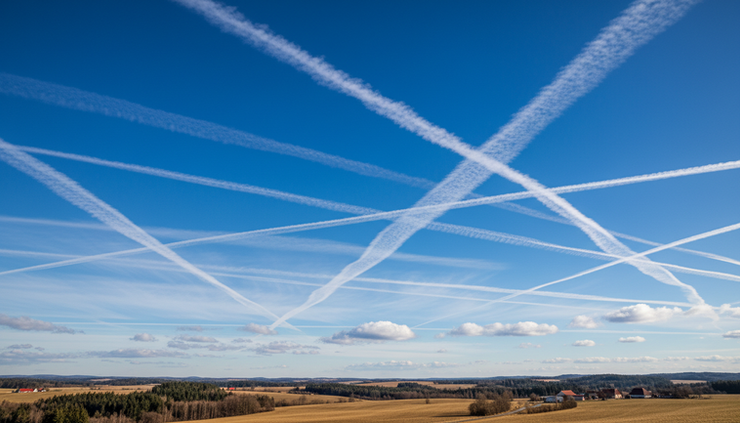
Chemtrail claims usually argue that aircraft contrails are secretly laced with substances such as aluminum oxides or barium salts to change climate, poison populations, or manipulate weather. These claims often point to persistent white trails behind aircraft as visual proof.
The better-supported explanation is simpler. Contrails form when hot, moist aircraft exhaust meets very cold air at high altitude. If the surrounding air is humid enough, ice crystals can persist and spread into cirrus-like clouds. Some contrails vanish quickly. Others last for hours.
That does not mean aviation has no climate impact. It does. Contrails can affect Earth’s radiation balance, especially at night, and aviation emissions contribute to warming. Researchers study these effects seriously. Airlines and regulators have discussed ways to reduce contrail formation on certain routes and at certain altitudes.
But that is different from proving a secret global spraying program.
A claim that aircraft are routinely dispersing metals for strategic weather control would require strong evidence:
Verified flight records tied to spraying hardware
Physical samples collected through controlled methods
Chain-of-custody lab testing
Budget documents or procurement records
Credible whistleblower evidence that can be checked
Repeatable atmospheric measurements showing unusual patterns
Publicly available evidence has not met that standard.
The 2010 Russian heatwave, for example, was a catastrophic event that damaged crops and contributed to global food concerns. Some commentators have claimed it was caused by foreign chemtrail operations. The better-supported explanations involve atmospheric blocking patterns, seasonal heat extremes, land conditions, and the broader context of a warming climate. Political or economic motives do not prove technological capability.
Suspicion grows when institutions communicate poorly. Yet skepticism should cut both ways. Governments should be questioned, and extraordinary claims should face serious testing.
HAARP is often misrepresented
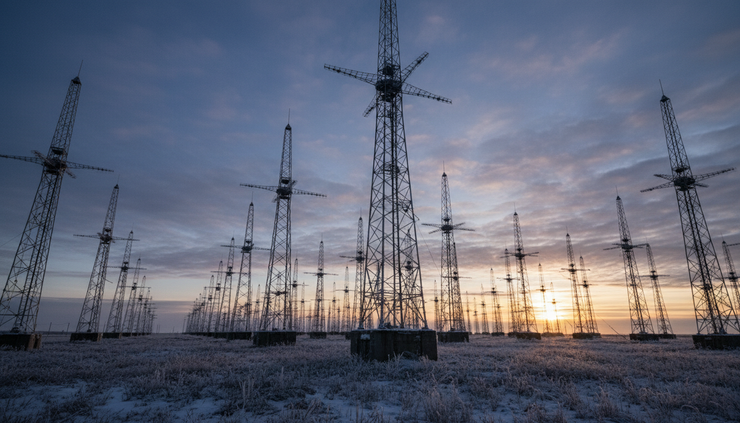
HAARP, the High-frequency Active Auroral Research Program in Alaska, is one of the most cited systems in weather warfare claims. It uses high-frequency radio waves to study the ionosphere, a region of the upper atmosphere filled with charged particles.
The ionosphere matters for radio communication, navigation, and space weather. Solar storms can disturb it. Military and civilian systems both depend on understanding it.
What HAARP does not have, based on publicly available science, is the ability to trigger earthquakes, create hurricanes, or steer typhoons across oceans.
The energy scale is the key issue. Hurricanes involve huge amounts of heat energy drawn from warm ocean water. Earthquakes release tectonic stress built up over long periods inside Earth’s crust. A research transmitter interacting with a thin region of the upper atmosphere is not operating on the same physical scale.
Claims that typhoons have been “mysteriously” steered toward cities during election cycles need more than timing and suspicion. Storm paths change because of sea surface temperatures, pressure systems, wind shear, and regional atmospheric patterns. Political timing can make disasters feel targeted, but feeling targeted is not proof of targeting.
That does not make ionospheric research harmless or irrelevant. It can support better communications, radar understanding, and space weather monitoring. It may also have military applications in signal behavior and over-the-horizon radar research. Those questions deserve oversight.
The leap from “this system studies the ionosphere” to “this system controls earthquakes” is not supported by reliable evidence.
Ionospheric heaters and electronic warfare are not the same as storm control
Ionospheric heaters are ground-based transmitters used to study how radio waves interact with the ionosphere. They can create small, temporary disturbances for research. This field overlaps with communication science, radar behavior, and space weather.
Separate from that, modern militaries use electronic warfare to jam radar, disrupt GPS signals, spoof navigation, and interfere with drones. These capabilities are real and increasingly important. They do not require control of the weather.
That distinction matters.
A military can disrupt communications without causing a storm. A state can jam GPS near a conflict zone without creating “artificial plasma pockets” over enemy airspace in the dramatic sense often described online. A drone strike may involve cyber operations, electronic interference, intelligence failures, or air defense gaps. It does not automatically point to exotic atmospheric manipulation.
Iran, Israel, China, Russia, and the United States all operate in a world where electronic warfare, satellite dependence, and climate stress are linked in strategic planning. The connection is serious enough without adding unsupported claims.
The atmosphere is part of the battlefield because signals pass through it, satellites observe it, and climate affects military readiness. That is different from saying every disaster is engineered.
The real geopolitical risk is governance
The strongest case for concern about climate engineering does not rest on chemtrail theories or earthquake weapons. It rests on governance.
If solar radiation management becomes technically feasible, the world will face hard questions:
Who has authority to approve deployment?
Can one country act alone during a climate emergency?
How will harm be measured across borders?
What happens if a project lowers global temperatures but changes regional rainfall?
Could a private actor attempt small-scale experiments without public consent?
How can nations verify what others are doing?
These issues touch national security. They also touch food security, water rights, public health, and international law.
A unilateral climate intervention could trigger diplomatic crisis even if it were peaceful in intent. If a drought followed, affected states might blame the country behind the intervention. If a flood followed, the same suspicion could appear. Climate is complex, so proving causation would be difficult. That uncertainty itself could become destabilizing.
The geopolitical danger is not only that a state might weaponize the atmosphere. It is that states might accuse each other of doing so during every extreme event.
That could make disaster response harder. It could inflame conflict. It could weaken trust in meteorology, climate science, and public safety warnings.
Secrecy feeds the worst theories
National security secrecy is unavoidable in some areas. States do not publish every detail about radar, satellites, electronic warfare, or military research. Yet secrecy has a cost. When people cannot see what institutions are doing, rumor fills the gap.
Climate engineering research needs a higher standard of openness than ordinary defense work because the atmosphere is shared. If field experiments occur, the public should know:
The purpose of the experiment
The materials used
The location and scale
The expected environmental effects
The monitoring plan
The authority that approved it
The process for public challenge or review
Transparency will not convince everyone. Some people will reject any official explanation. Even so, open data makes it easier for journalists, researchers, courts, and international bodies to assess claims.
The same applies to weather modification. Cloud seeding programs should publish basic operational information when security and safety allow. If a state modifies local precipitation, neighboring communities have a right to understand what is being attempted and what evidence shows.

How to read weather warfare claims without dismissing every concern
A useful approach is to separate three questions.
Is the technology real?
Cloud seeding is real. Contrails are real. Ionospheric research is real. Electronic warfare is real. Solar radiation management proposals are real.
Earthquake triggering by HAARP, hurricane steering through radio waves, and secret global chemtrail spraying have not been demonstrated with reliable public evidence.
Is the claimed effect physically plausible?
Scale matters. Local cloud seeding and global climate intervention belong in different categories. So do radar jamming and storm creation. If a claim skips the energy requirements, atmospheric conditions, and measurement problem, treat it carefully.
Is there verifiable evidence?
Anecdotes, strange-looking clouds, storm timing, and geopolitical motive are not enough. Strong claims need testable evidence from multiple sources. The more dramatic the claim, the stronger the proof must be.
This does not mean trusting governments blindly. It means refusing to replace blind trust with blind certainty.
The battlefield ahead
Climate change will make weather more politically charged. Heatwaves, droughts, floods, hurricanes, and wildfires already shape elections, migration, insurance markets, military planning, and food prices. As losses grow, pressure for technological intervention will grow with them.
Some tools may help in limited ways. Better forecasting saves lives. Cloud seeding may support water management in specific conditions. Carbon removal may reduce long-term risk if it scales responsibly. Research into sunlight reflection may improve understanding, even if deployment remains too risky.
The danger comes from shortcuts. Secret programs, unilateral experiments, military framing, and exaggerated public claims can all make a fragile situation worse.
The atmosphere does not respect borders. That single fact makes climate engineering a geopolitical issue whether or not the most extreme weather warfare claims are true.
A serious debate should start with evidence, physics, law, and public consent. The future risk is not a cartoon superweapon hidden in every cloud. It is a world where climate pressure becomes so intense that nations begin treating the sky as territory to be managed, contested, and defended.


Comments